At its heart, the symbolism is simple.
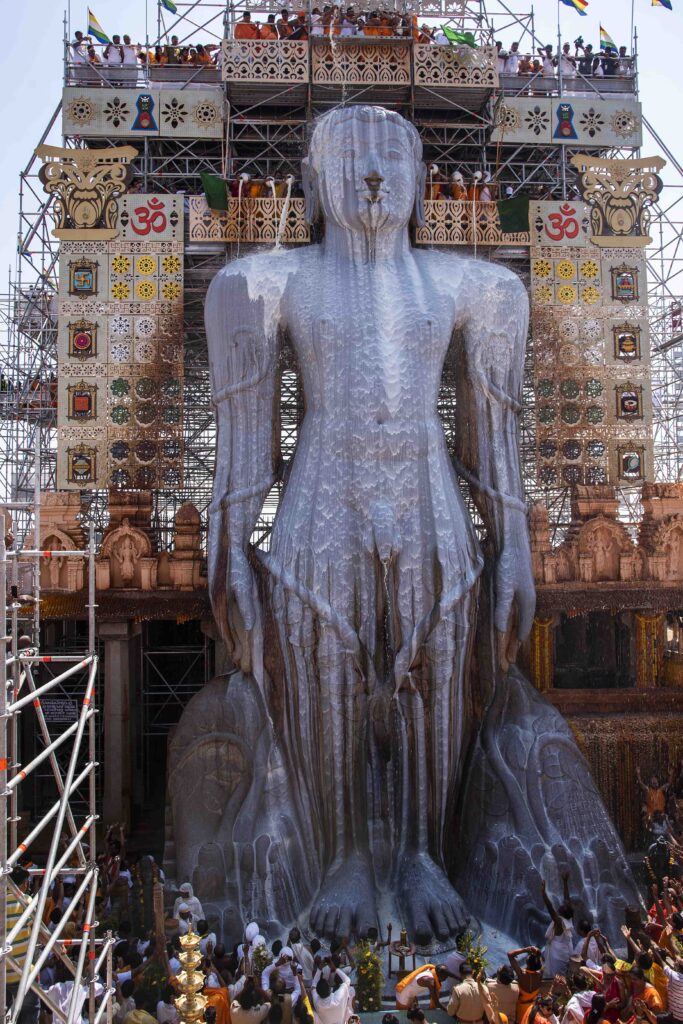
The act of pouring represents letting go.
Water cleanses, milk nurtures, sandalwood soothes, flowers remind us of impermanence. Together, they signify the gradual shedding of ego, desire, and attachment—layer by layer—until only stillness remains.
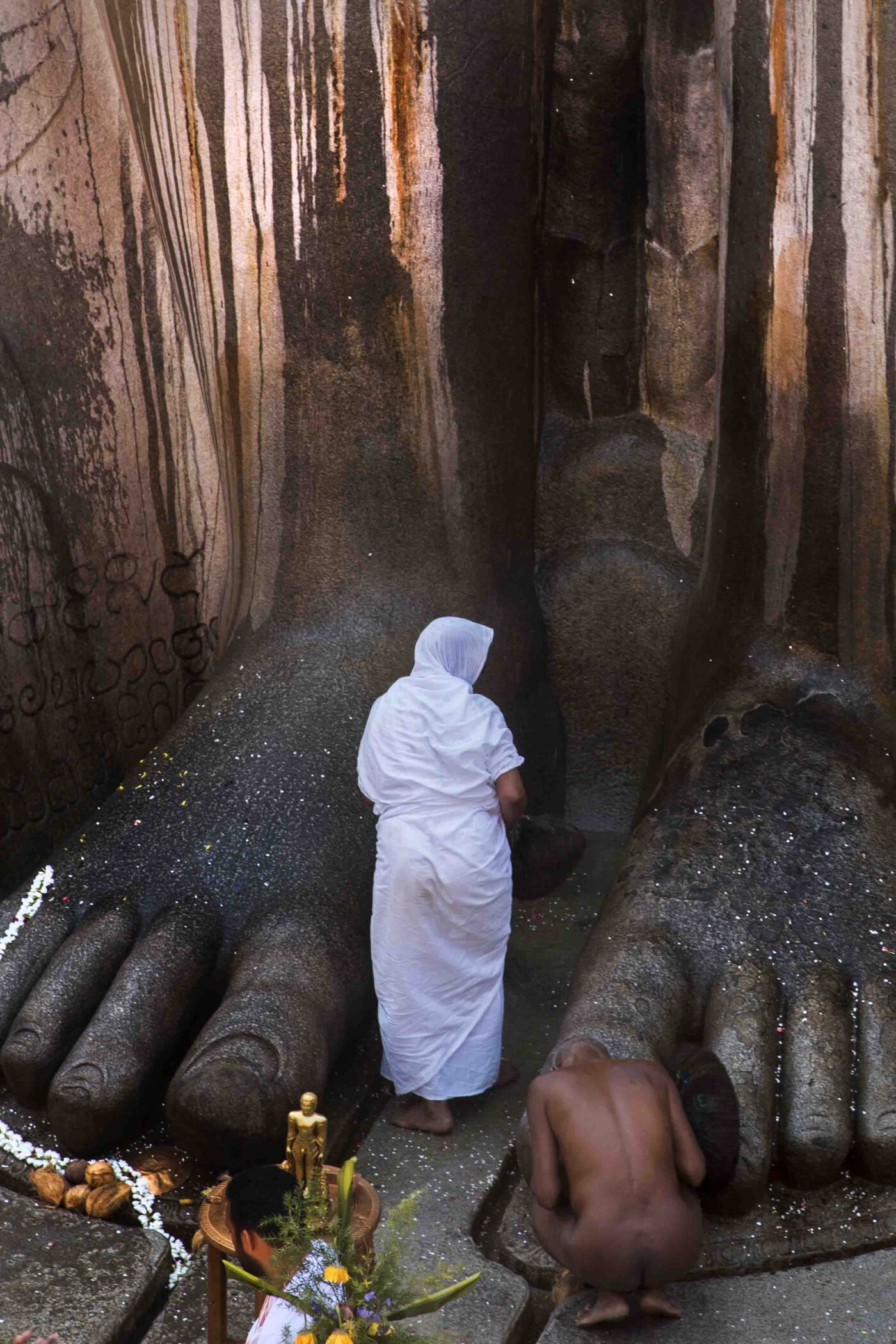
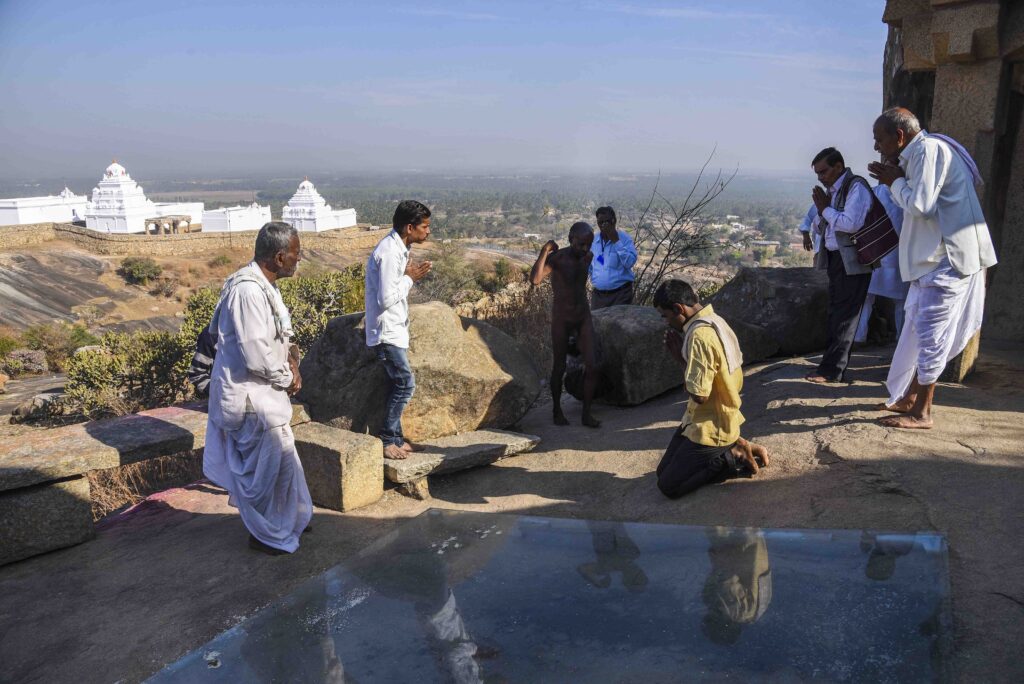
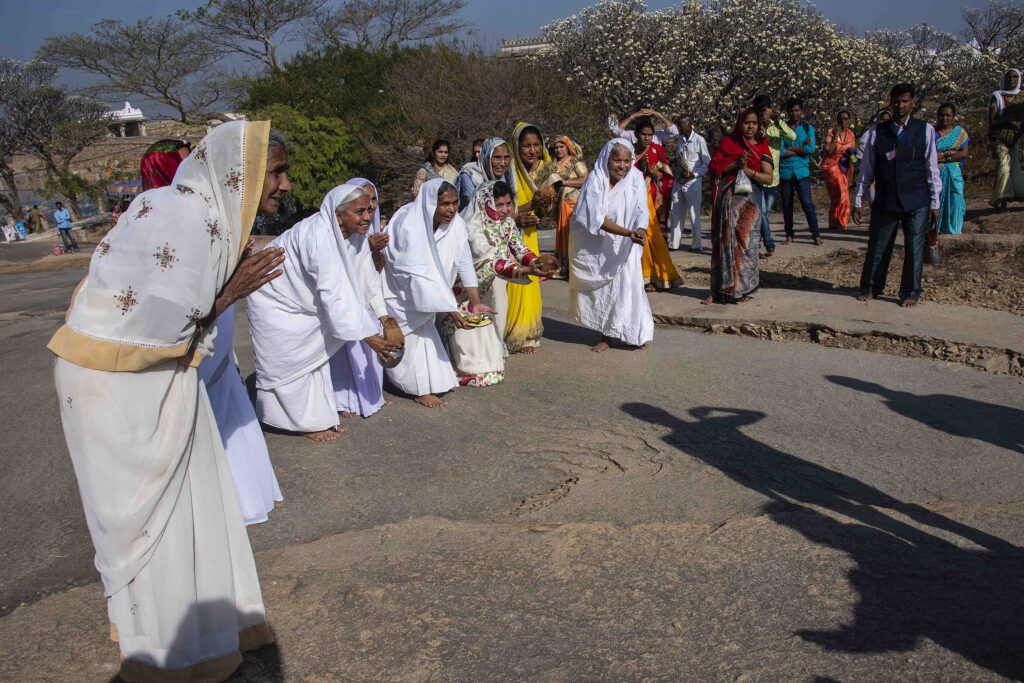
What makes Mahamastakabhishek profoundly moving is the contrast it presents: immense human effort directed toward honouring absolute detachment. Thousands climb the steps, cranes are erected, elaborate arrangements are made—yet the figure being worshipped stands for doing nothing, wanting nothing, needing nothing.
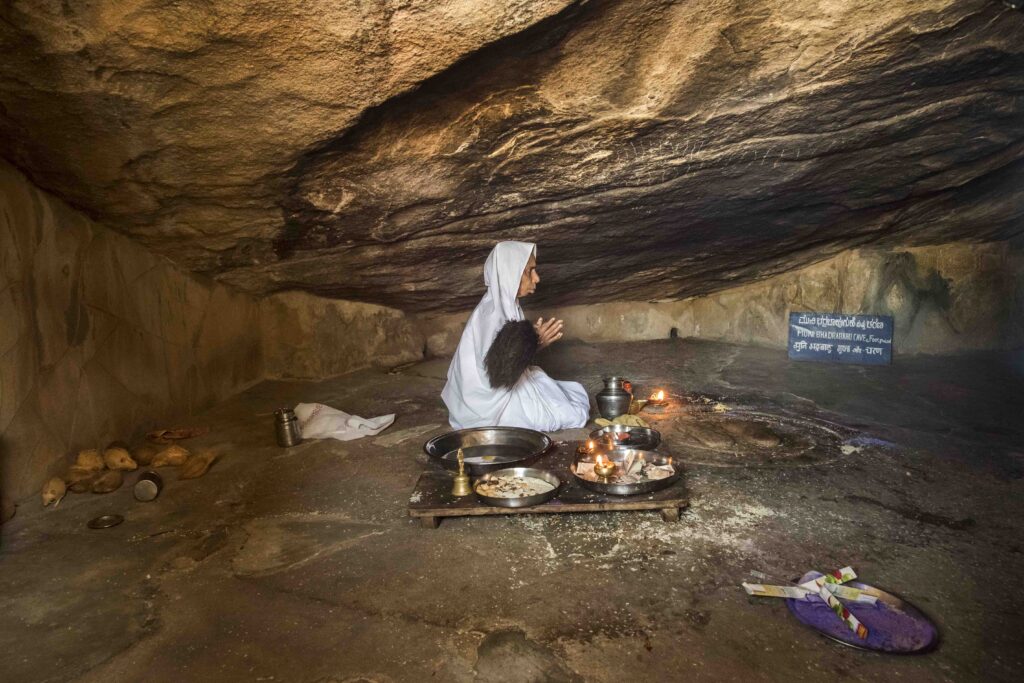
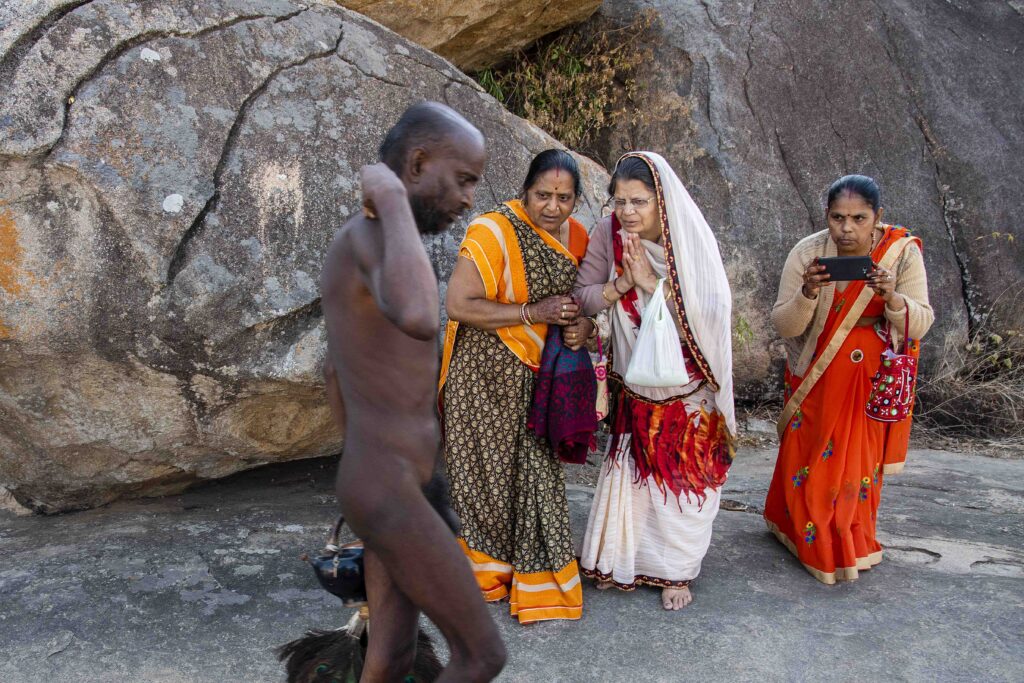
For a photographer, this ceremony is not about spectacle alone. It is about observation. The slow movement of liquids over stone mirrors the slow movement of thought during contemplation. The expressions of devotees—focused, humbled, silent—reveal stories that unfold without drama. Here, the camera must learn patience. The most powerful frames emerge not from haste, but from waiting.
Photography, like spirituality, demands stillness. One must stand quietly, allowing moments to arrive rather than chasing them. Just as Bahubali remains unmoved amid centuries of devotion, the photographer learns to remain present amid crowds, noise, and ritual—seeing beyond the surface into the essence.
Mahamastakabhishek teaches us that liberation is not dramatic. It does not shout. It simply stands, unwavering, while the world pours itself over it. In observing this ritual—whether through the naked eye or through a lens—we are reminded that sometimes, the deepest truths are found not in movement, but in stillness that endures.